As a high school librarian and a ravenous bookworm, I read a lot. In fact, I read so much in 2023 that in 2024, I made a goal to read LESS.
I ended up reading 131 books instead. Whoopsy-daisy.
From those 131 books, I’ve selected my favorites from each month of 2024 to share in this post. Summaries are weirdly hard for me and I’m in the thick of the fourth trimester, but I did it for you, all three of the faceless internet people who skim this over the next decade. (Self-deprecating remarks, unnecessary adverbs, and excessive parentheses are my bread and butter. Welcome to my blog.)
I hope something on this list ends up being a favorite read of yours this year! If you’ve read and loved any of these, let me know in the comments! I’d also love your recommendations for what I should read this year. My 2025 TBR is already wildly unrealistic, but don’t let that stop you!
January
Fiction: Divine Rivals by Rebecca Ross

Ugh, this BOOK. I wish I could read it for the first time again and I have a feeling it might become a comfort read for me. To use a word I’m way too old and uncool to use: the VIBES. The vibes are so good. This is the book that indirectly launched this blog; everything about it was so delicious that it gave me the hunger to write again. In the midst of a war of the gods, two rival journalists unwittingly connect through a magical typewriter. I inhaled this book and its sequel, Ruthless Vows, which was a nice conclusion to the duology but not quite as spellbinding as the first book.
Nonfiction: God of All Things: Rediscovering the Sacred in an Everyday World by Andrew Wilson [audiobook, narrated by Derek Perkins]

Listen, you can argue with me all you want about classifying books about God as nonfiction, but respectfully, in my worldview, this is nonfiction. In this book, Andrew Wilson explores how our Creator, through things He created, shares His story and character. It’s a simple premise, beautifully executed. Through this lens, the author unpacks everything from dust and donkeys to gardens and galaxies. This book refreshed my heart and soul more than I can describe.
February
Fiction: Lunar New Year Love Story by Gene Luen Yang and LeUyen Pham [graphic novel]
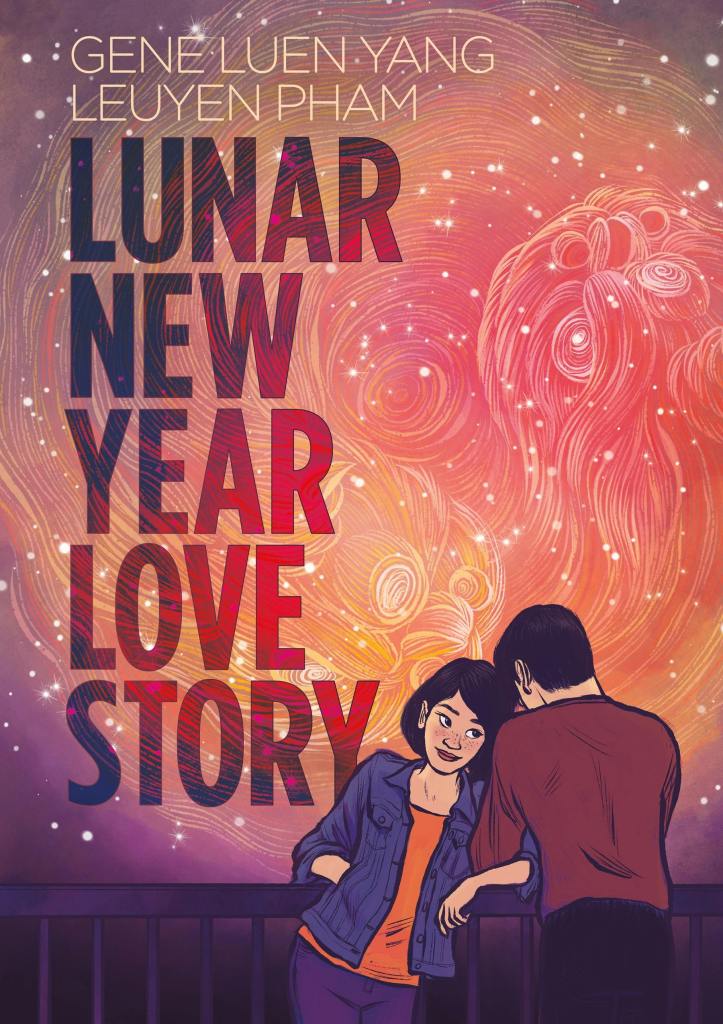
So first of all, Gene Luen Yang and LeUyen Pham are two of the nicest people you could ever meet, and I would know because I had the privilege of meeting them when my students interviewed them at the Tucson Festival of Books. But even if they were garbage people (again, they were not), I would love this book. I’m not a big graphic novel person (I find them harder to read than all-text novels!), but having read Gene Luen Yang’s Dragon Hoops, which was not only a graphic novel but also somehow managed to make me care about a high school basketball team (?!?), I was happy to give this a chance. It was such a sweet read with surprising depth (I had low expectations for a rom-com in graphic novel form, okay?), BEAUTIFUL illustrations by LeUyen Pham, and a grandma character that had me actually laughing out loud. Also, fun fact about LeUyen Pham: when you get a book signed by her, she sketches a portrait of the book’s recipient inside. It takes her about two minutes and a sharpie and the result is frame-worthy. I had her do a portrait of my daughter in her picture book Outside, Inside (my daughter was born in 2020, so it was fitting), and it makes me tear up every time I look at it.
Nonfiction: Life in Five Senses: How Exploring the Senses Got Me Out of My Head and Into the World by Gretchen Rubin [audiobook, narrated by author]

The author shares her journey of deliberately engaging all five of her senses to ground herself more in the world around her. It’s part memoir, part mindfulness manifesto, and part celebration of wonder. I was hoping it would help get me out of my own head, and while it wasn’t a magic pill by any means, it did give me some good ideas (that I’ve since forgotten, but that’s pregnancy/postpartum brain for you).
March
Fiction: A Tempest of Tea by Hafsah Faizal

Fun fact about me: I have a hard rule that I don’t read series until all the books are out (you can blame my trauma on Robert Jordan, RIP). This is the first of a duology, but my students interviewed author Hafsah Faizal at the Tucson Festival of Books and this was the book we had to read to prepare for the interview, so I broke my rule. And as I read the last page, I remembered another reason for my rule: cliffhangers. The cliffhanger was too good and I’m mad about it. No, actually, I’m absolutely irate because now I have to wait until September 2025 for the sequel, A Steeping of Blood. What’s the book about, you ask? Think Six of Crows but with a teahouse that moonlights as a blood supplier for vampires. I’m not into vampire books, but this one worked for me.
Nonfiction: Brave, Not Perfect: Fear Less, Fail More, and Live Bolder by Reshma Saujani
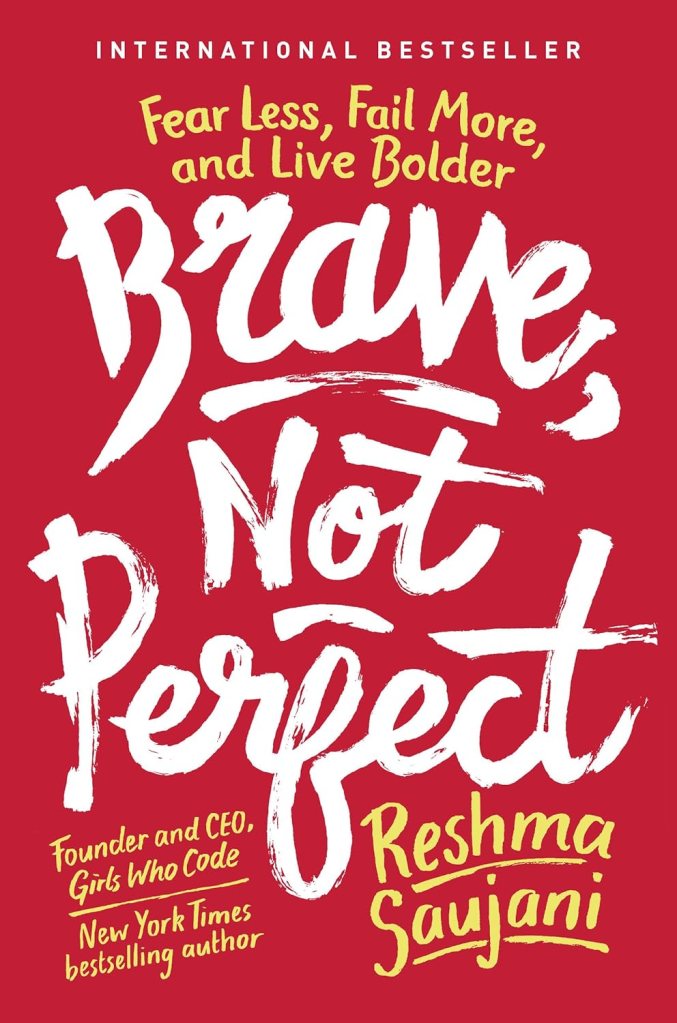
My principal (boss) recommended this to me a few years ago under the guise of it being helpful in my work with perfectionistic gifted students, but also possibly because she’s noticed that I’m a bit of an unhealthy perfectionist myself. (Is there a healthy kind? I think not, but we won’t get into that.) As the title suggests, this book juxtaposes perfectionism with bravery and unpacks how we train girls to be “perfect” (i.e. careful, quiet, polite), which is ultimately creating fearful and voiceless women. I am absolutely the target audience for this book. It truly is self-help for me. It’s also making me more aware and intentional about how I parent my daughter.
April
Fiction: Dune by Frank Herbert
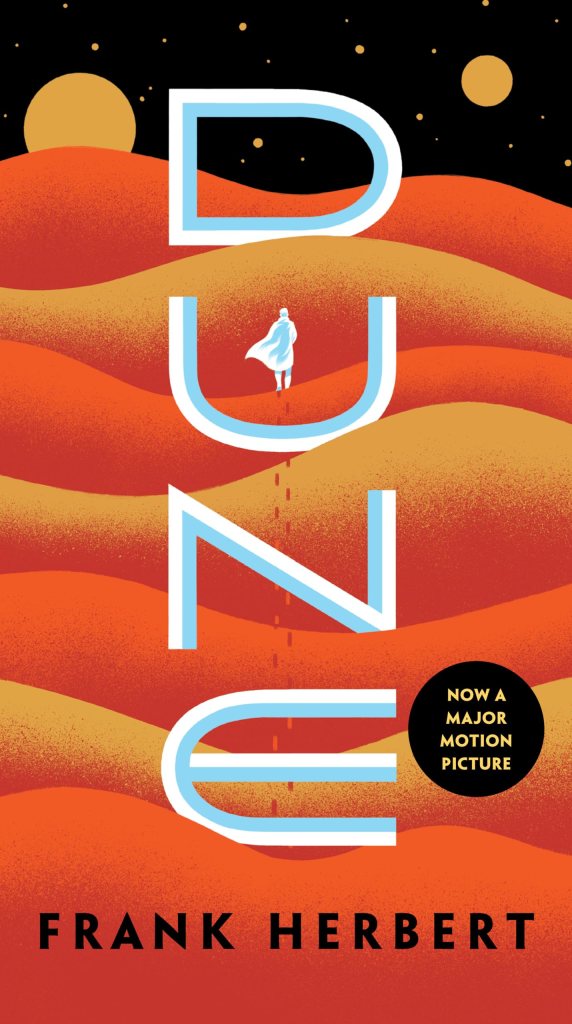
For the first two hours of this 24-hour-long audiobook, I kept thinking, “I’m too stupid for this book.” But I persisted out of familial obligation; my parents’ first date was the OG 1980-whatever Dune movie so I owe this book my existence. Once I started having a clue what was happening, I was hooked like a Fremen’s maker hook to a sandworm. I still haven’t seen the original movie adaptation, but the recent ones were very true to the book, in my very-casual-fan opinion.
Nonfiction: The Anthropocene Reviewed: Essays on a Human-Centered Planet by John Green [audiobook, narrated by author]
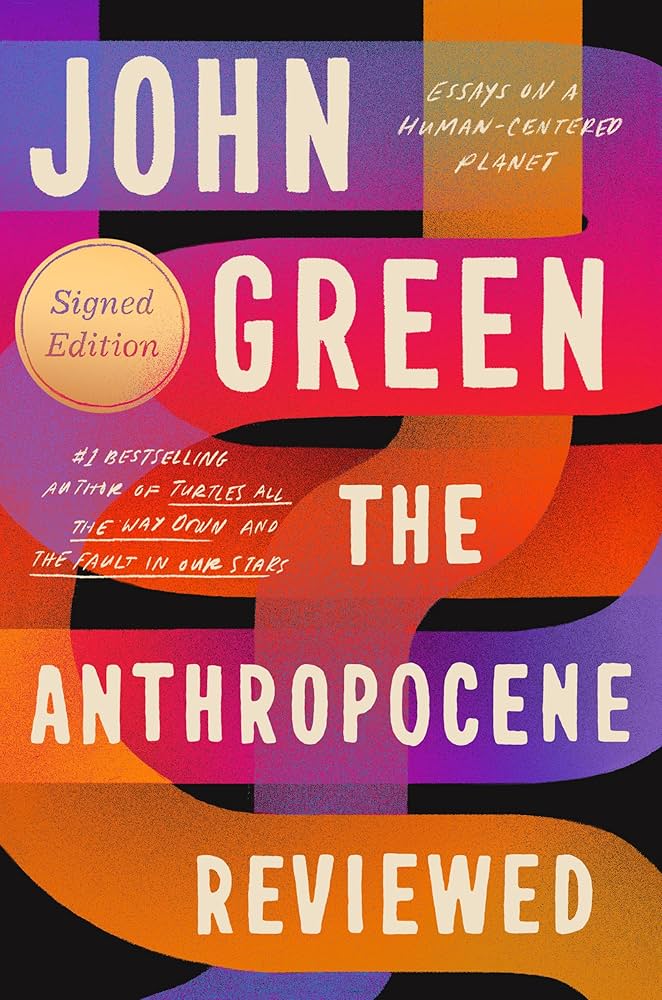
John Green reviews everything from air conditioning to sycamore trees to Googling strangers to the human capacity for wonder on a five-star scale. The result is a surprisingly engaging and thought-provoking collection of essays that taste like a memoir. The audiobook is narrated by the author himself, and if you’ve ever watched one of his Crash Course videos on YouTube, you know this was a five-star idea. To John Green, in the highly unlikely event you ever stumble across this in your internet wanderings: though I may harbor some lingering, undeserved resentment towards you because of the classmate in my Creative Writing undergrad program who constantly compared my fiction to yours and found mine lacking, I truly loved this book. Five stars.
May
Fiction: The Rom-Commers by Katherine Center [audiobook, narrated by Patti Murin]
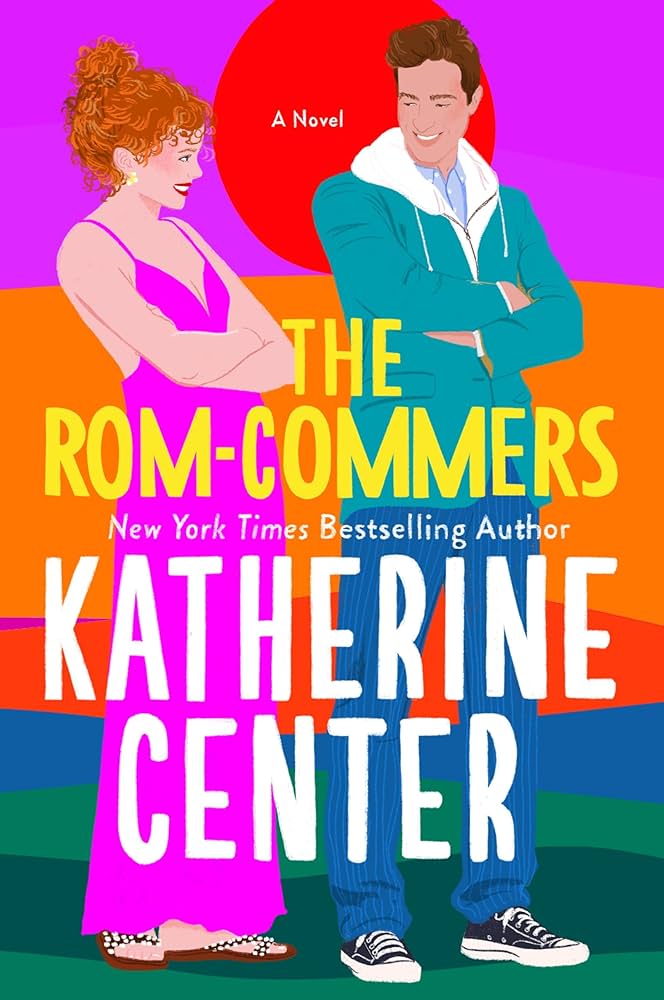
The protagonist Emma has abandoned her writing dreams to take care of her ailing father, but gets the opportunity to rewrite a script with her screenwriting idol. The two clash immediately and the fun (for the reader) begins! The perks of being a librarian: I’m can access some books on NetGalley before their publication (advanced readers copies), and that was the case for this audiobook. I’m learning that audiobooks of romance novels give me the ick (when female narrators put on a “male” voice or vice versa, I cringe), but this narration was tolerable. I read Funny Story by Emily Henry this same month, which I expected to love more, but I much preferred this one. It had more depth.
Nonfiction: Travels With Charley: In Search of America by John Steinbeck

My grandpa Charley gave me this book when I was a young adult and it was both one of the first nonfiction books I actually enjoyed and my first Steinbeck. Now that I appreciate Steinbeck, it was worth a reread. This is a travelogue of the author and his poodle Charley driving across the U.S., and it’s full of Steinbeck’s trademark insights on humanity. It’s important to note that this was published in the 1960’s and some of Steinbeck’s commentary reflects the time. Also, apparently there’s some controversy that Steinbeck may have used some creative license in his account. In other words, some of the story might not be entirely true, which if we’re being honest, is probably the case for all memoirs, intentionally or not. On the bright side though (spoiler, highlight with cursor to read): THE DOG DOES NOT DIE IN THIS BOOK.
June
Fiction: East of Eden by John Steinbeck [audiobook, narrated by Richard Poe]
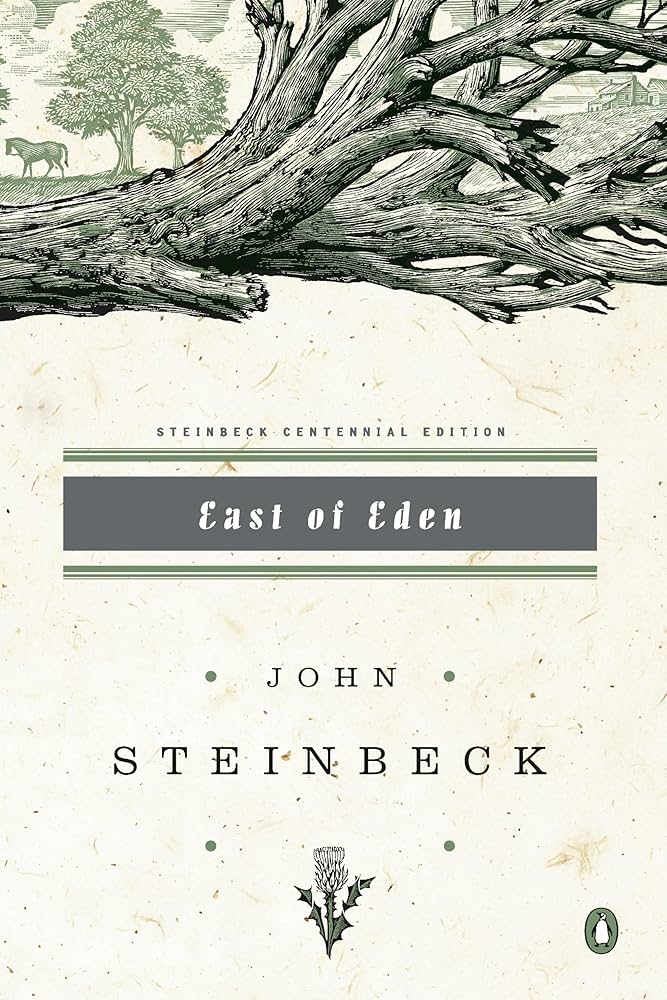
Another Steinbeck makes the list! You know when you’re driving and you suddenly realize you don’t know how you got to point B? (And it’s lowkey terrifying?) That was me reading this book for the first time a decade or so ago. I slogged through just to say I’d read it or something, then I finally woke up about 500 pages in (my copy had about 550) when I read a line that made it a 5-star read for me even though I remembered nothing else about what I’d read: “And now that you don’t have to be perfect, you can be good.” Whew, bam, chills. Anywho, now that I decided I like Steinbeck’s work, it was time to go back and read it for reals and…I loved it. It’s a family saga that echoes the biblical Cain and Abel story across two generations. As it’s a saga, it’s hard to explain so I won’t try, but it’s considered a classic for good reason.
Nonfiction: Killers of the Flower Moon: The Osage Murders and the Birth of the FBI by David Grann [audiobook, narrated by Will Patton, Ann Marie Lee, and Danny Campbell]
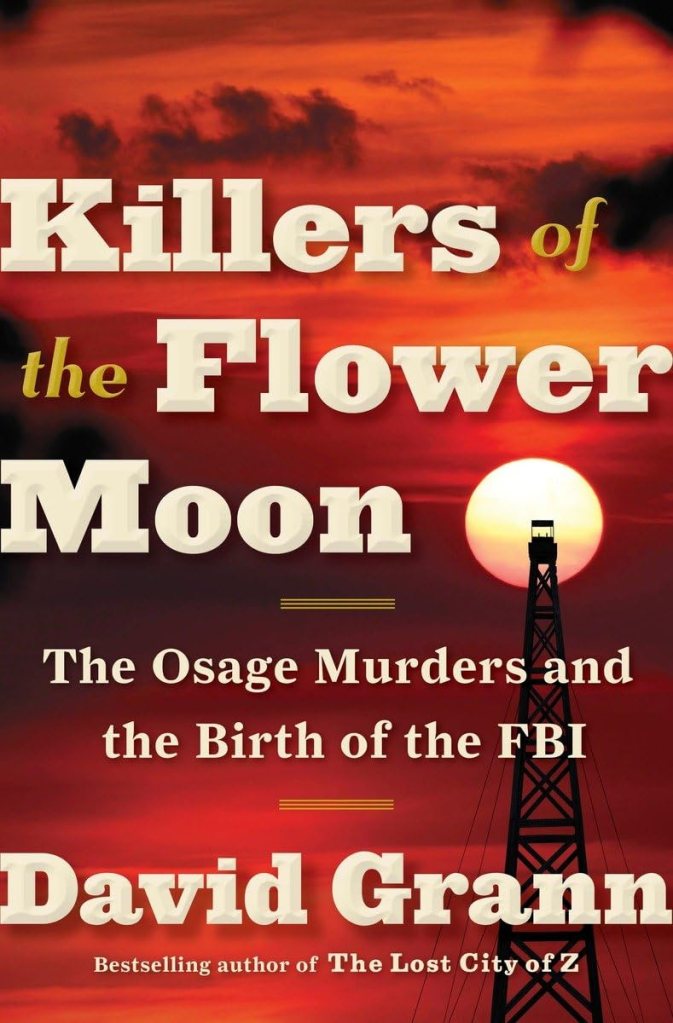
In the 1870’s, the Osage Nation was forcibly relocated by the U.S. government from Kansas to Oklahoma. Unbeknownst to anyone, their new territory had oil in abundance, and the people of the Osage Nation became the richest in the world upon its discovery. In the 1920’s, one tribe member after another was murdered, and as the death toll rose with no satisfying answers, the FBI stepped in (under the direction of J. Edgar Hoover, who was the WORST). Spoiler (although the marketing summary reveals as much): what seemed at first like unrelated crimes or perhaps a serial killer turns out to be a sinister conspiracy. I read this because it sounded interesting (it was) and because I wanted to watch the movie. Six months later, I still haven’t seen the movie, maybe because in reading the book, I discovered that (real spoiler this time) Leo DiCaprio’s character is not the hero in this one.
July
Fiction: Caraval by Stephanie Garber
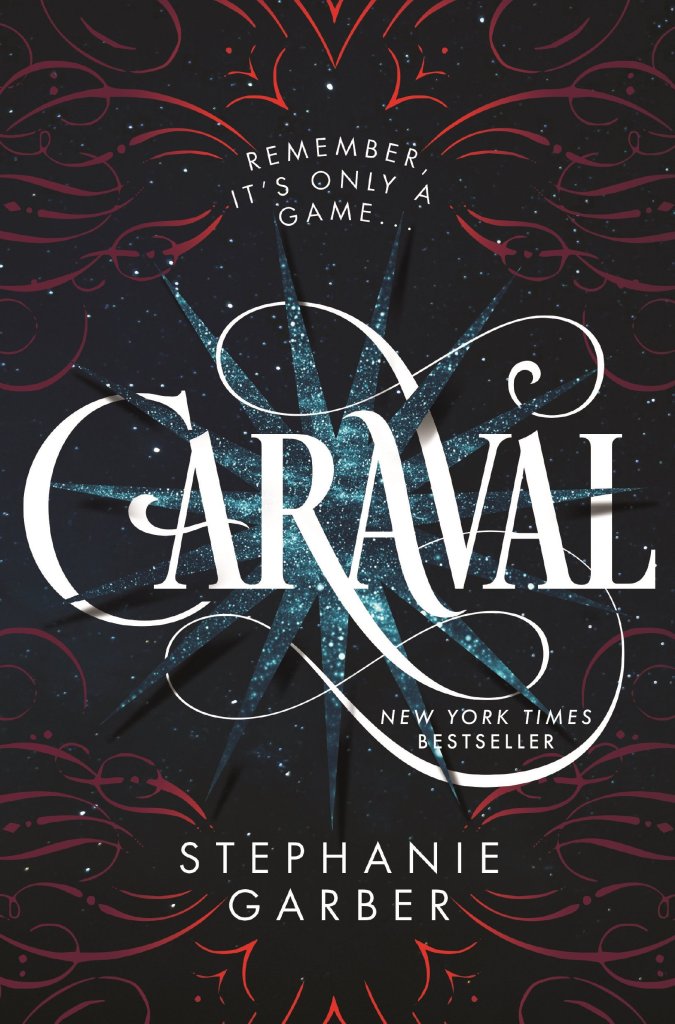
This book is like the magic of The Night Circus swirled around with sugar and riddles and wishes (and teenage hormones, let’s be real). It’s fast-paced yet whimsical, just a treat to read. I revisited the Caraval trilogy in anticipation of finally reading the Once Upon a Broken Heart trilogy (see: favorite fiction book for August), which takes place in the same universe after the events of the Caraval trilogy.
Nonfiction: Unoffendable: How Just One Change Can Make All of Life Better by Brant Hansen
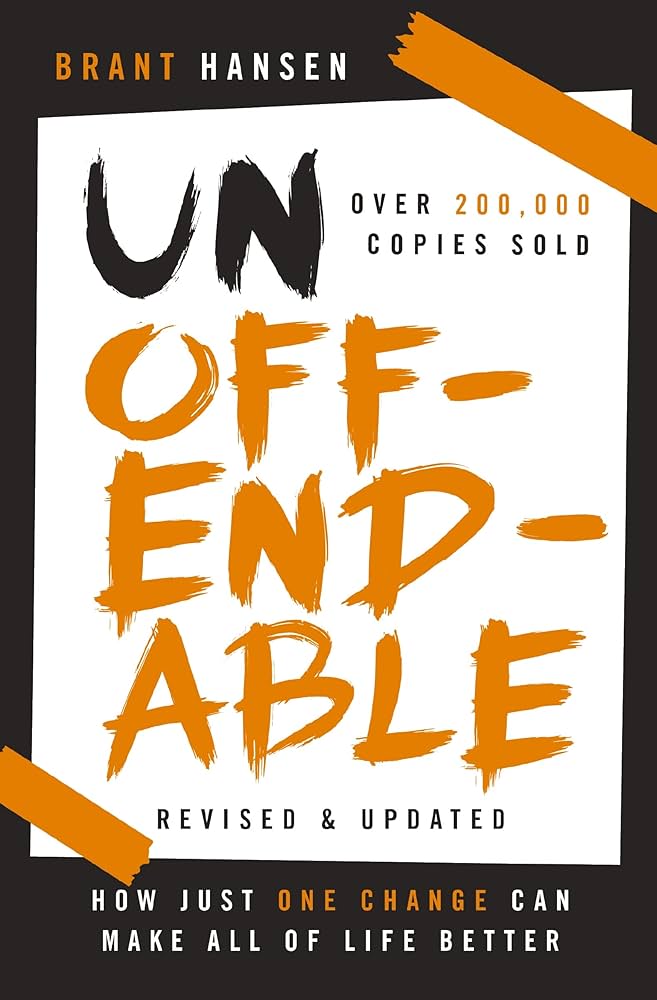
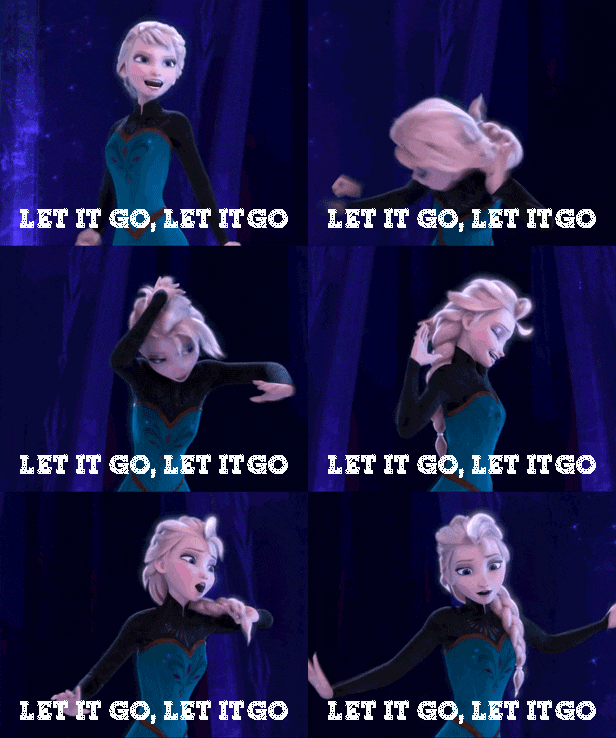
This was a good, quick kick in the pants, but not anything groundbreaking to me. The message is best summed up in one GIF by every three-year-old girl’s favorite Disney character: Let it go.
August
Fiction: The Ballad of Never After by Stephanie Garber
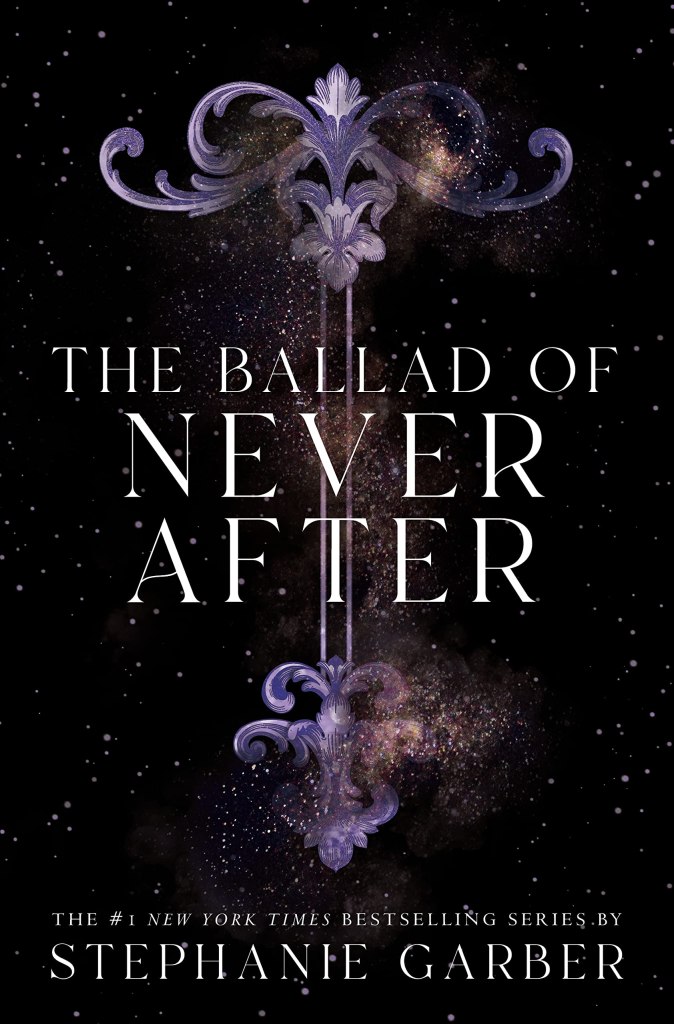
The middle book in a trilogy is always the proverbial middle child (sorry, I went there). Case in point: The Two Towers, the reason I no longer trust myself to just “remember what page I was on” (a story for another day) and throw some kind of object into the book (not usually a bookmark though, TBH) to save my spot. Anywho, back to the topic at hand: Stephanie Garber should teach a class on how to make the middle book in a trilogy the best one because book two in both the Caraval trilogy and this trilogy (Once Upon a Broken Heart) were fantastic. In this installation, we realize that Jacks, the heartless Prince of Hearts, maybe has a heart after all. And we’re introduced to the Hollow, which is one of the coziest fictional settings I’ve ever had the privilege to fall into. Also, the plot: much at stake, much twists, much pulled heartstrings! It hurts so good.
Nonfiction: Discovering Wes Moore by Wes Moore [YA adaptation of The Other Wes Moore: One Man, Two Fates]
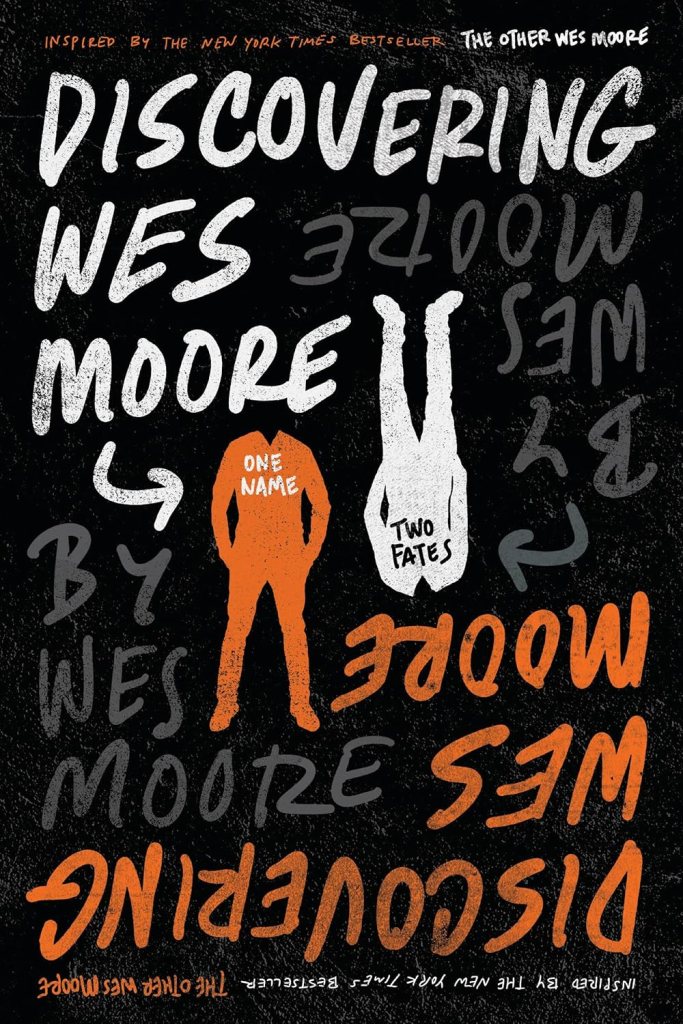
A man named Wes Moore learns about a different man, also named Wes Moore, whose life circumstances started very similarly but took a drastically different direction. It’s an interesting exploration of how the people in our lives, our choices, and things outside our control influence outcomes. This memoir is a very quick read and I have a feeling it might capture the interest of male teen readers who “don’t like to read.” (To which I always add, “Yet.”)
September
Fiction: The Ferryman by Justin Cronin
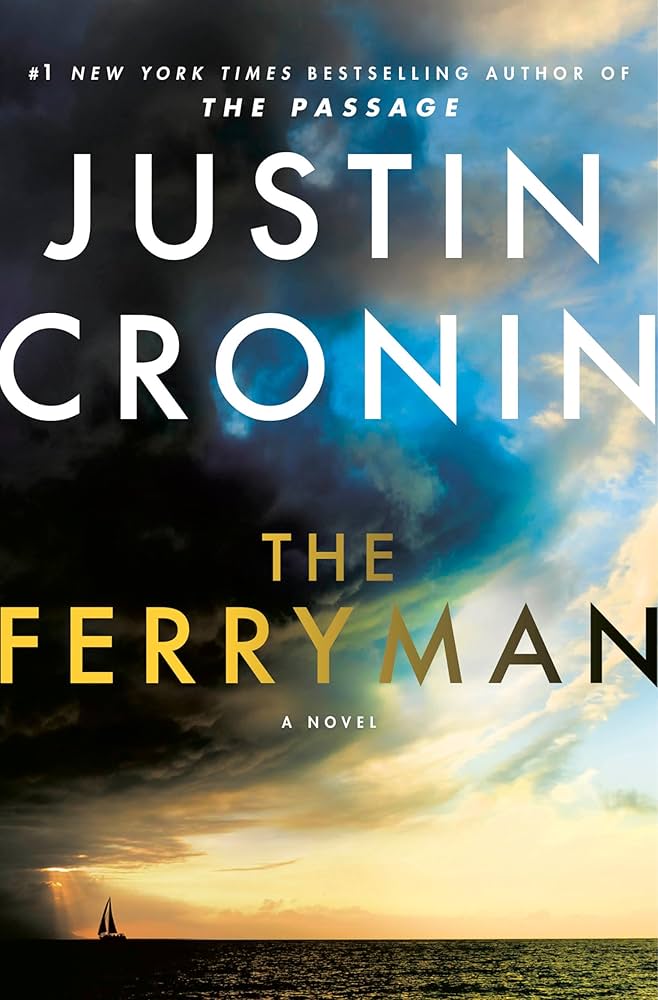
I call this one “The Giver for grownups.” (Just kidding, The Giver is for everyone and I’ll die on that hill.) Even though I typically avoid horror (and I swear, I don’t like vampire books, even if this is the second one I’m referencing in this post), I read his Passage trilogy years ago, and loved it. Sure, it gave me nightmares for years, but it was a true work of literature (seriously). The Ferryman wasn’t as good as The Passage, but still a fun read! This one is a standalone dystopian novel in which the most privileged citizens of the island of Prospera live picture-perfect lives until their bodies start to deteriorate, at which time they’re sent off to have their bodies renewed and their memories wiped clean. After this “retirement,” they return to Prospera and rinse and repeat. The protagonist Proctor is a ferryman (someone who guides people to the ship that will bring them to their retirement), and when his own father resists his retirement and delivers a strange message, he starts to question everything. The twist at the end is wild.
Nonfiction: Teach Your Children Well: A Step-by-Step Guide for Family Discipleship by Sarah Cowan Johnson
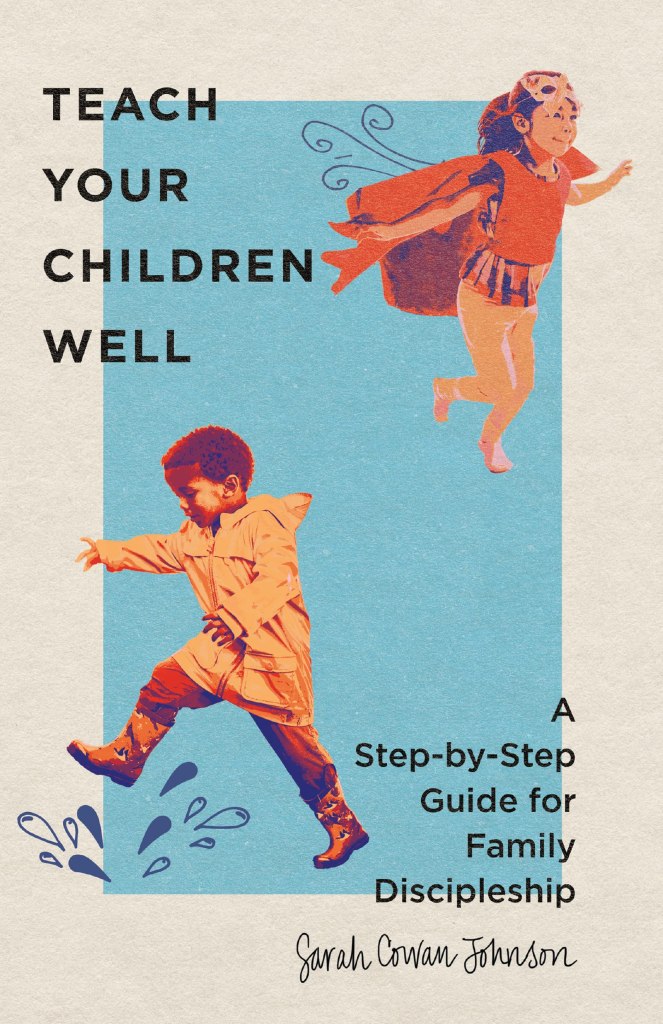
The author shares so many practical and approachable strategies for building a healthy culture of faith in your family. I read this as part of an informal mom’s book study through my church, and I found it to be immediately applicable, theologically sound, and very encouraging. I’ll be revisiting this one again and again over the many years of parenting to come.
October
Poetry: All Along You Were Blooming: Thoughts for Boundless Living by Morgan Harper Nichols
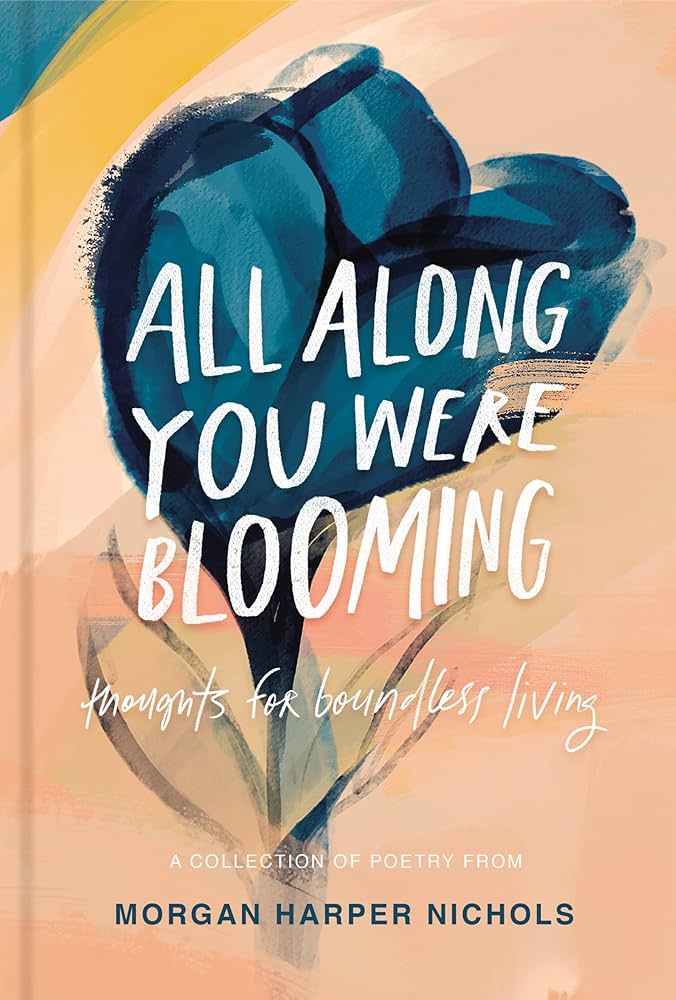
October was a rough fiction month for me, so I picked this book of art and poetry by the wonderful Morgan Harper Nichols instead. I savored this one over several months because every page included her beautiful artwork and soul-quenching words. This lovely little tome would make a great gift to someone transitioning into a new phase of life.
Nonfiction: The Small and the Mighty: Twelve Unsung Americans Who Changed the Course of History, from the Founding to the Civil Rights Movement by Sharon McMahon [audiobook, narrated by author]
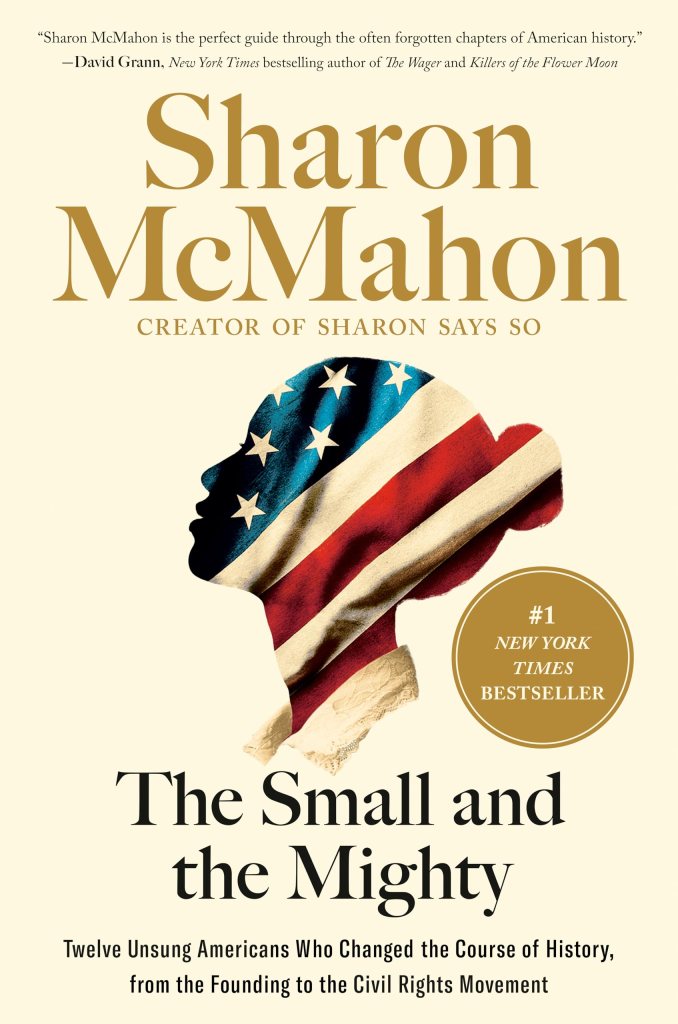
Sharon, oh Sharon, how I love you. I just want to be Sharon McMahon’s friend in real life. I love her heart for educating others and her goofiness. If you don’t already follow @sharonsaysso on Instagram, what are you even doing on Instagram? And if you are already following her, you won’t be surprised to hear that this book is really good. Other reviewers observe that it sometimes it feels a little all over the place, like the stories don’t quite connect in the way you’d expect, but that’s how I roll too, so I mostly didn’t mind.
November
Fiction: Dear Justyce by Nic Stone

Dear Martin and its sequel, Dear Justyce, are two of the best YA realistic fiction books published this century. I really think you have to read both of them to fully appreciate what the author has accomplished; they represent two different sides of the same coin, that coin being discrimination in the American justice system. One of the things I love about fiction is its potential to build empathy, and these books are a great example of that. Nic Stone’s storytelling humanizes the “other side” without ever shying away from harsh realities of prejudice in policing (Dear Martin) and the prison system (Dear Justyce). To me, these books are educational without being preachy, and I truly think they should be required reading in American high schools (and beyond). And come to think of it, this could be the fictional counterpart to Discovering Wes Moore (see: August nonfiction pick); I think a tandem read of the two would make for a really interesting book club or classroom discussion. A third book, Dear Manny, is supposed to be published in March this year. I read an ARC and it was also excellent.
Nonfiction: Braiding Sweetgrass for Young Adults: Indigenous Wisdom, Scientific Knowledge, and the Teachings of Plants by Robin Wall Kimmerer, adapted by Monique Gray Smith [audiobook, narrated by Monique Gray Smith]
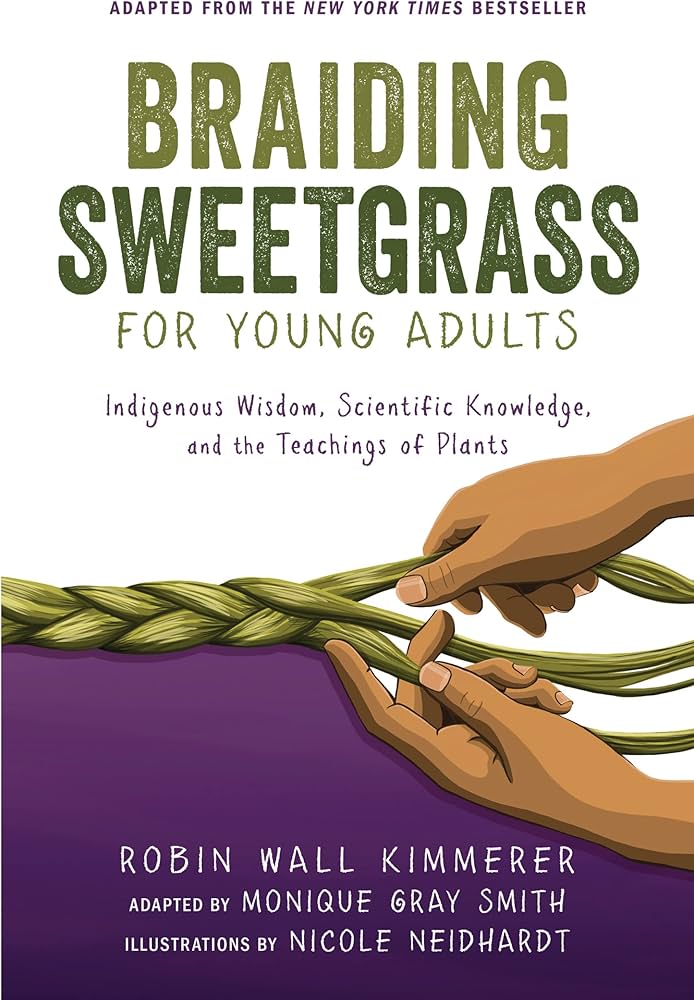
Robin Wall Kimmerer, a scientist and a member of the Potowatomi Nation, shares scientific and Indigenous knowledge about plants. The stories in this book serve as an evergreen reminder that nature is a gift, encouraging reflection on how we engage with our planet. The original edition of this book has the same name (minus “for Young Adults”) and is about twice as long with a more general audience. I bought the young adult edition for our high school library some time ago because it seemed like it would appeal to a certain type of reader, but while I thought it sounded mildly interesting, I didn’t really expect to be that reader. About a year later, a friend of mine started talking about the original book and it piqued my interest. At the same time, the topic intimidated me (due to my lack of background knowledge mostly), so I decided to ease into it with the young adult adaptation and the audiobook. (Although I think I missed out by doing the audiobook in this case; the print version of the young adult edition has illustrations!) Anyway, it was great and now I want to read the “real” thing.
December
Fiction: Lovely War by Julie Berry

If you threw The Book Thief (immortal narrators), any Percy Jackson book (Greek gods among us), and Divine Rivals (war + music + romance + vibes — yes, I used that word again) in a blender together, the result might be something like this. And yet, I didn’t love it half as much as I loved any of those books. In a nutshell: the Greek gods narrate two intersecting WWI love stories as Aphrodite tries to make a point to Ares and Hephaestus in some kind of trial in a hotel room as WWII rages. Yup, you read that right. I enjoyed it overall, but the framework felt a little too contrived at times.
Nonfiction: Talking to Strangers: What We Should Know About the People We Don’t Know by Malcolm Gladwell [audiobook, narrated by author]
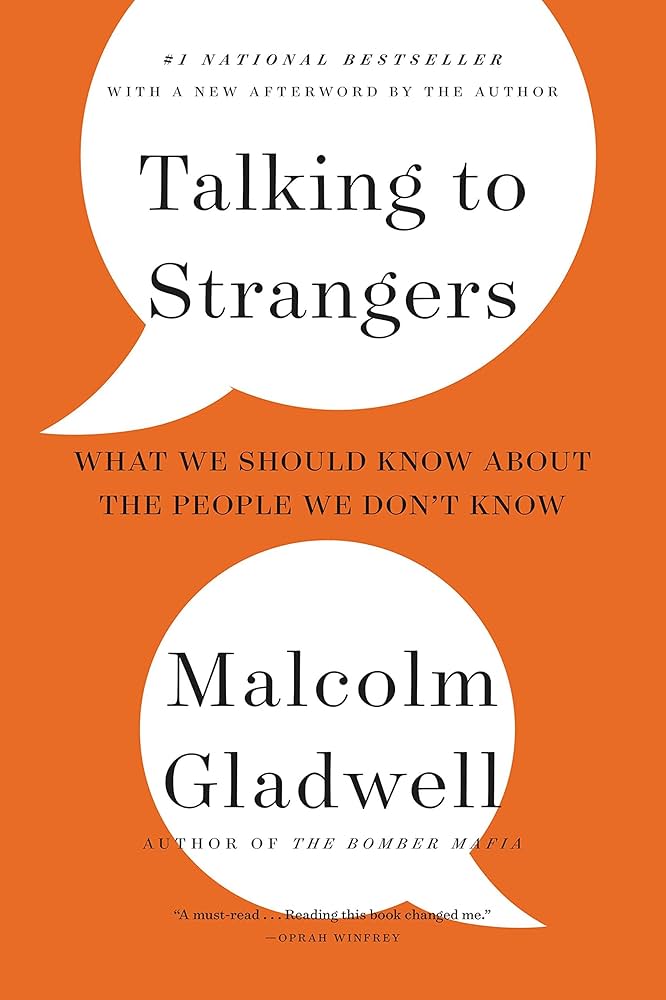
While some of the case studies made me sick to my stomach and the overall message (basically: people lie and we’re bad at reading people) was depressing, the podcast-style of the audiobook was addicting. I wouldn’t say I enjoyed it, but I wouldn’t say I didn’t enjoy it either.
Faves of the faves!
My top three for fiction and nonfiction from last year (in alphabetical order because I can’t decide how to rank them and, you know, I am a librarian):
- Fiction
- Dear Justyce by Nic Stone
- Divine Rivals by Rebecca Ross
- East of Eden by John Steinbeck
- Nonfiction
- The Anthropocene Reviewed by John Green
- Braiding Sweetgrass for Young Adults by Robin Wall Kimmerer & Monique Gray Smith
- God of All Things by Andrew Wilson
Your turn?
What were your favorite reads in 2024?

 paige in the library